Winter wonderland - or a fresh challenge for the immunocompromised horse?
It’s the 4th January 2026 and the weather is gloriously crisp. Temperatures this week have dropped to -5 near me, and given the lack of grass in my paddocks, I made the decision to switch from bringing the horses in for six-hours in the daytime (out in the field for the rest), to bringing them in overnight.
Given my aim is for the horses to live out 24/7, 365 days a year, this isn’t a decision I’ve made lightly. But with very limited grazing and a horse that needs dust extracted hay or low sugar, low NSC haylage feeding my herd of three at the moment is pretty pricey and I need to manage my paddocks with care if we are to have anything to eat come spring.
Last winter, ‘C’ spent 3.5 months battling an abscess that refused to extract itself from his hoof (damn those rock hard healthy feet!). Having spent some time indoors, poulticed, on traditional small bale hay - a tiny ‘hay cough’ gradually grew into respiratory problems which at their worst, needed medicating with steroids in both liquid and tablet form. It wasn’t fun - and it took us until April to get the measure of it - mostly by removing dry hay (soaking and steaming instead) and eventually, making the switch to commercially bagged haylage. His compromised immune system slowed recovery, despite supplementation and careful (micro)management.
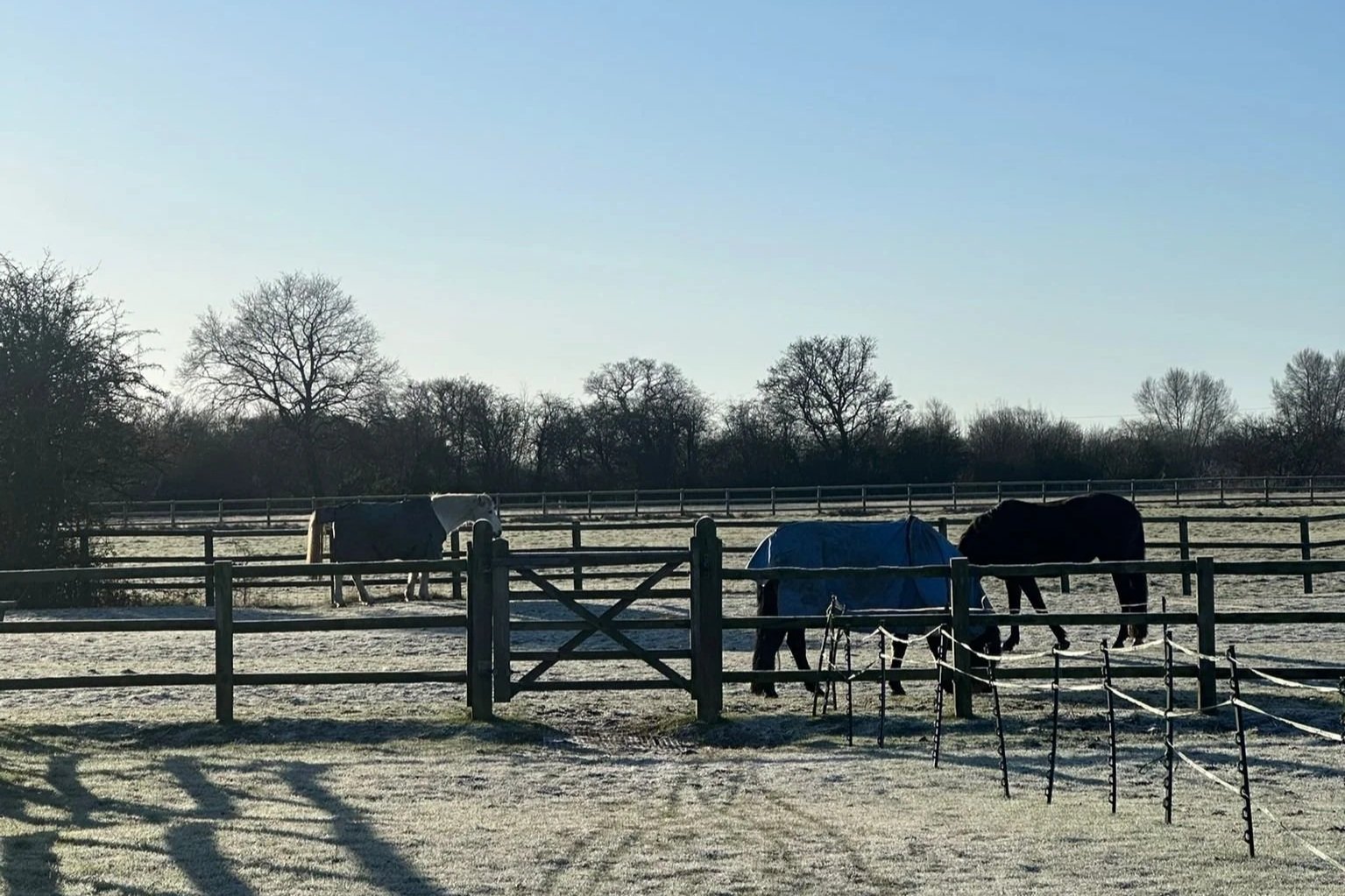
‘The gang’ on a beautiful crisp January morning.
This year I ‘think’ have it covered. Two palettes of bagged low sugar haylage and dust extracted hay sit neatly side-by-side in my store. I’m also weighing the hay/haylage so I have a better understanding of what they will eat at night.
I’ve swapped the bedding from Aubiose (which was lovely but took so long to need replacing I was concerned ammonia might be contributing to our problems) to a dust-extracted chopped straw product (currently trialing Burlybed Red). It’s definitely not dusty and I have the choice to deep litter and leave the wet in for longer, or remove it daily (which I do).
C’s diet - which includes swathes of anti-oxidents is in a good place. Adding in Malle Mash last year has kept his coat in better condition - and while we still have some flaking skin and itchy behaviours, they are significantly reduced. His weight is good - not fat, not thin - and having just had his hocks medicated (two years’ since our last injections) - I’m hopeful we’re set up for a good Spring (when the arena thaws!).
But I’m always looking to do better. And I definitely DO NOT want a repeat of the respiratory issues that blighted us last year. So I’m trialling sea-buckthorn as a skin and respiratory tonic to help him cope with the time indoors. I’ve opted for a Nupafeed/Sea Buckthorn Company product that is rich in Omega Oils -3, -6, -7 and -9. A 5ltr BSC Sea Buckthorn, should in theory, last a horse 56 days at the maintenance level of 90ml per day. A loading dose of 180ml is recommended (I’ve decided not to do this as I have other omega-rich elements to C’s diet. You can read an article about the benefits of sea buckthorn in winter on the Nupafeed website.
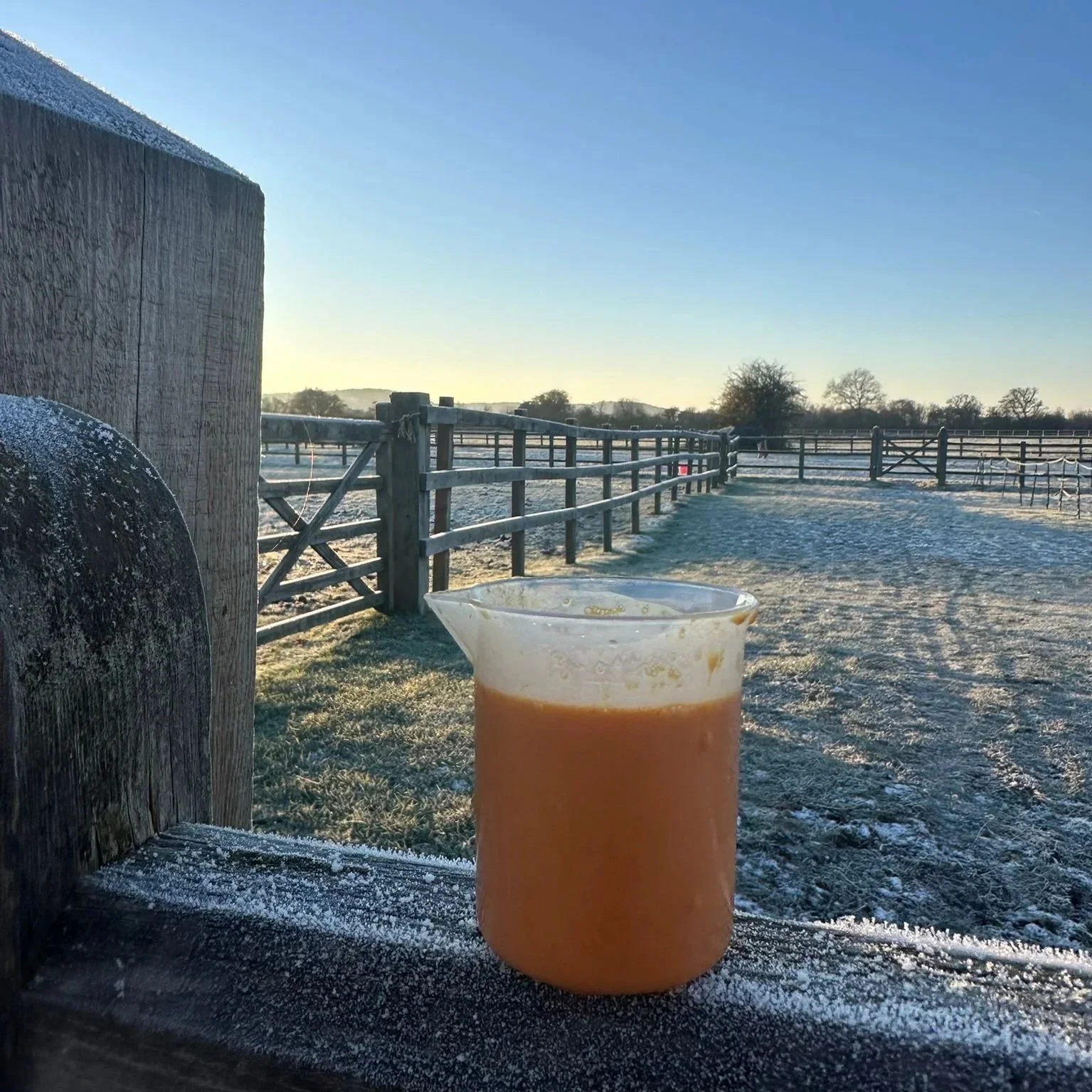
A 90ml dose of sea buckthorn in a plastic measuring jug
It’s not cheap, so I’m also reviewing C’s diet overall to reduce duplication and give him time off some supps - just so I’m clear what works for him and really makes a difference. So the chia seeds will go back in the box for now and I’ll give him a break from feeding milk thistle too. We’re always so keen to help our horses, we can definitely overdo it. Balance is key.
When the thaw sets in I’m looking forward to getting back in the school to see how he’s feeling. Wish me luck!